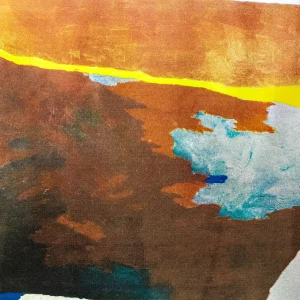
Arpana Caur
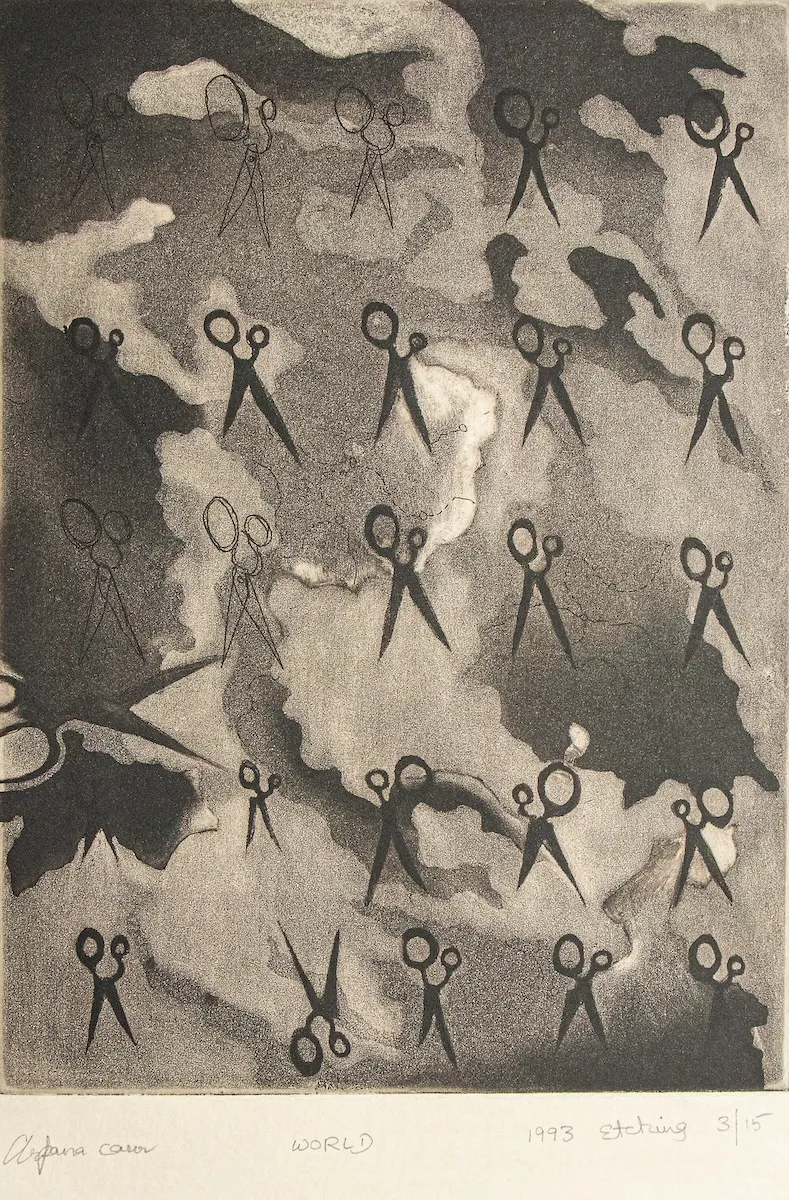
Arpana Caur is a highly acclaimed, self-taught contemporary Indian painter and graphic artist whose powerful visual narratives explore the human condition, feminism, and spirituality.
Early Life and Career
Born on September 4, 1954, in New Delhi, self-taught painter Arpana Caur grew up in a vibrant household as the daughter of writer Ajeet Cour. Influenced by Punjabi folklore, literature, and the Partition’s legacy, she transitioned from a Literature degree to launching her international art career in the late 1970s.
Artistic Style and Legacy
Caur’s visual language is deeply allegorical, blending indigenous traditions with contemporary themes:
- Feminist Lens: Features empowered, resilient women, explicitly rejecting erotica.
- Symbolic Motifs: Uses scissors, thread, and clocks to comment on time and destiny.
- Cultural Fusion: Blends Pahari miniatures, Punjabi folklore, and Sufi mysticism with modern themes.
Legacy and Current Status
Today, Caur remains actively engaged in her creative practice, continuing to create new works like her Devi (2026) series. Alongside her artistic pursuits, she is a dedicated philanthropist. She co-runs the Academy of Fine Arts & Literature in Delhi with her mother, supporting environmental causes, old widows, and the education of underprivileged girls. Her masterpieces are permanently housed in premier institutions worldwide, including the Victoria and Albert Museum in London and the National Gallery of Modern Art in India. Asit Kumar Haldar
Asit Kumar Haldar (September 10, 1890 – February 13, 1964) was a foundational pillar of the Bengal School of Art and a major force in the modern Indian art renaissance. A grand-nephew of Rabindranath Tagore, he brilliantly bridged Indian classical traditions with contemporary experimentation.
Early Life and Career
Born in Jorasanko, Calcutta, Haldar trained under Abanindranath Tagore at the Government School of Art. His early career was defined by pioneering expeditions between 1909 and 1921 to document and copy the ancient frescoes of the Ajanta, Bagh, and Jogimara caves, which deeply informed his vision. He became the first principal of Shantiniketan’s Kala Bhavana (1911–1923) and later made history as the first Indian principal of the Government School of Arts and Crafts in Lucknow (1925).
Artistic Style and Legacy
Haldar’s work shifted fluidly across watercolors, tempera, and lacquer. His style is defined by three key characteristics:
- Wash Technique: Co-introduced the Bengal “wash” technique, blending Indian tempera with East Asian ink traditions.
- Lyrical Lines: Prioritized poetic rhythm and emotional anatomy over European realism.
- Mythological Narratives: Created a monumental series illustrating history, Buddhism, and literary classics.
Legacy and Later Years
In 1925, Asit Kumar Haldar became the first Indian principal of Lucknow’s Government School of Arts and Crafts. In 1934, he became the first Indian elected Fellow of London’s Royal Society of Arts. A prolific painter and author, Haldar shaped modern Indian art pedagogy until his death on February 13, 1964.