M. F. Hussain
Maqbool Fida Husain (1915–2011), popularly known as M. F. Husain, was one of India’s most prolific and internationally recognized modernist painters. Often called the “Picasso of India,” he played a pivotal role in revolutionizing Indian art by blending traditional Indian themes with Western modernist techniques like Cubism.
Early Life and Career
Born in Pandharpur, Maharashtra, Husain was largely a self-taught artist. His early career in Mumbai involved painting massive cinema hoardings and designing wooden toys, experiences that influenced his signature bold lines and “larger-than-life” narrative style. In 1947, he became a founding member of the Progressive Artists’ Group, which sought to break away from colonial-era traditions and establish a new, modern identity for Indian art post-independence.
Artistic Style and Legacy
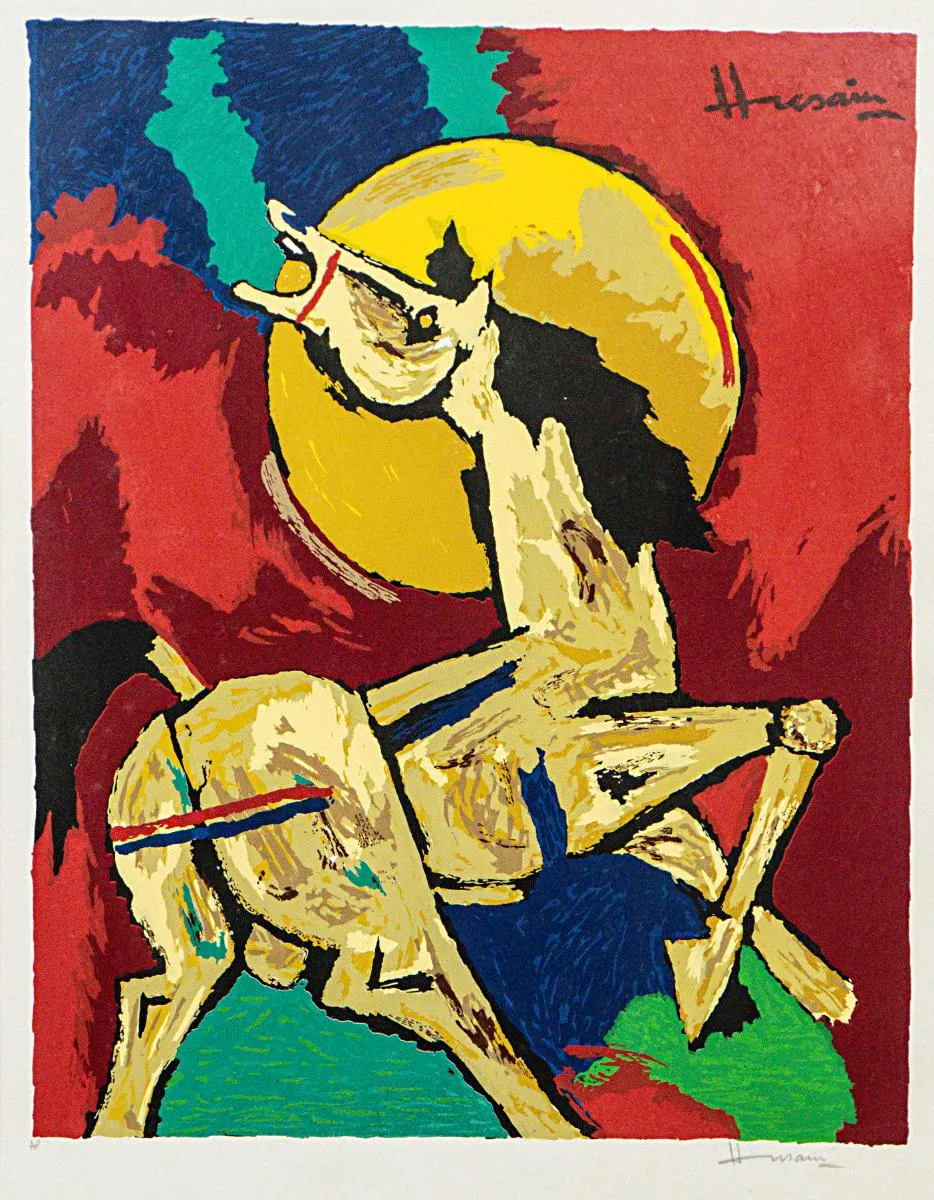
Husain’s work is characterized by a bold, vibrant use of color and a modified Cubist style. He had a unique ability to blend high art with folk sensibilities, often depicting:
- Indian Epics: Reimagining themes from the Ramayana and Mahabharata.
- Iconic Figures: Frequent portrayals of Mother Teresa and Mahatma Gandhi.
- Symbolic Animals: His series on horses is perhaps his most famous, symbolizing power, speed, and unbridled spirit.
Legacy and Later Years
Throughout his career, Husain received India’s highest civilian honors, including the Padma Shri, Padma Bhushan, and Padma Vibhushan. He was also an acclaimed filmmaker; his short film Through the Eyes of a Painter won the Golden Bear at the Berlin International Film Festival in 1967.